
New Energy & Battery Solutions
Cleanroom Requirements in Lithium-Ion Battery
Battery manufacturing facilities often combine cleanroom requirements with very low-humidity dry-room processes, dense utilities, demanding production schedules and heightened fire-safety considerations. The enclosure system must integrate closely with HVAC/dehumidification systems and production equipment. Glostar supports project teams with modular wall and ceiling systems, cleanroom doors and windows, prefabricated openings, accessories and technical coordination tailored to lithium-ion battery facilities.
Typical Design Priorities
• Low-humidity process support
• Airtight enclosure details
• Fire-conscious material choices
• Dense utility coordination
• Fast factory fit-out
• Future production expansion
What a Lithium-Ion Battery Cleanroom Enclosure Must Solve
The best enclosure configuration comes from process requirements, operating conditions and project interfaces — not from panel thickness alone.
Humidity Control Support
Use airtight enclosure details that work with dehumidification and dry-room strategies.
Air Leakage Reduction
Pay close attention to joints, doors, windows and penetrations.
Fire-Safety Requirements
Select materials and assemblies based on project fire design requirements.
Equipment Integration
Coordinate openings and partitions around cell, module and pack production lines.
Construction Schedule
Use factory-prefabricated components to reduce site work and speed installation.
Operational Flexibility
Allow future modification as process equipment and production capacity evolve.
Typical Lithium-Ion Battery Cleanroom Areas
Use room function, process risk and operating conditions to determine cleanliness, materials, sealing and enclosure details.
Electrode Processing Areas
Cell Assembly
Battery Dry Rooms
Module & Pack Assembly
Material Airlocks
Controlled transfer areas supporting moisture and cleanliness management.
Inspection & Laboratory Areas
Testing environments integrated into battery manufacturing facilities.
Lithium Battery Cleanroom vs. Dry Room
The best enclosure configuration comes from process requirements, operating conditions and project interfaces — not from panel thickness alone.
| Battery Cleanroom | Battery Dry Room | |
| Primary Control | Airborne particles | Moisture + particles |
| Key System | Filtration / HVAC | Dehumidification + airtight enclosure |
| Enclosure Focus | Clean surfaces & sealed joints | High airtightness & moisture control |
| Typical Use | Controlled battery production | Moisture-sensitive processes |
Recommended Cleanroom System Configuration
01
Airtight modular wall systems coordinated with low-humidity process requirements.
02
Ceiling enclosures integrated with dehumidification, HVAC, lighting and services.
05
Utility Penetrations
Factory-coordinated openings for cables, ducts, pipes and equipment.
06
Fire-Conscious Panel Options
Rock wool and other system choices according to project fire requirements.
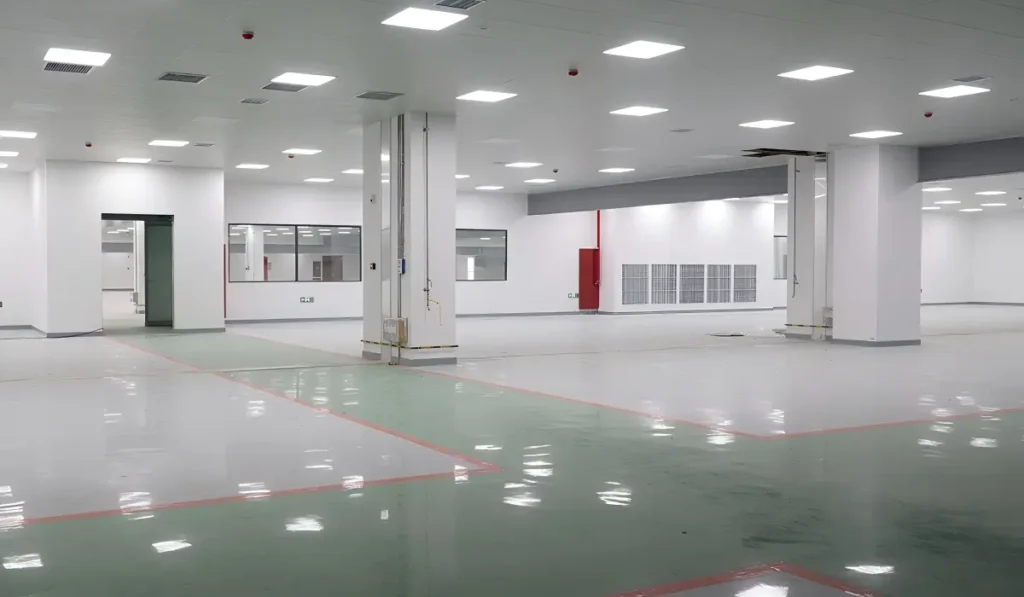
Why Glostar for Lithium-Ion Battery Cleanroom Projects?
Glostar combines cleanroom enclosure products with engineering and project support, helping contractors and owners reduce coordination gaps between design, factory production and site installation.
Project-Based Engineering
Panel layouts, openings and system detailing based on project drawings.
Integrated Product Package
Wall, ceiling, doors, windows and accessories from one coordinated supplier.
Factory Prefabrication
Reduce on-site cutting and improve installation consistency.
مراقبة الجودة
Production inspection, dimension checks and project-based packing control.
Installation Support
Drawings, technical guidance and coordination according to project scope.
Customization
Core material, finish, dimensions, openings and accessories can be project-specific.
Key Design Considerations for Lithium Battery Cleanrooms
Humidity Target
Enclosure airtightness should be coordinated with the project’s dehumidification strategy and required environmental conditions.
Particle Cleanliness
Wall and ceiling systems should support the cleanliness requirements of sensitive battery manufacturing processes.
Equipment & Utility Integration
Prefabricated openings can be coordinated with ducts, cables, pipes and automated production equipment.
Future Expansion
Modular enclosure systems can simplify future production-line changes and facility expansion.
Related Lithium-Ion Battery Projects
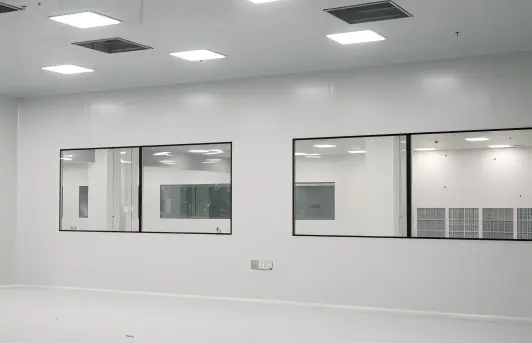
Luoyang Photovoltaic Industrial Park Projects
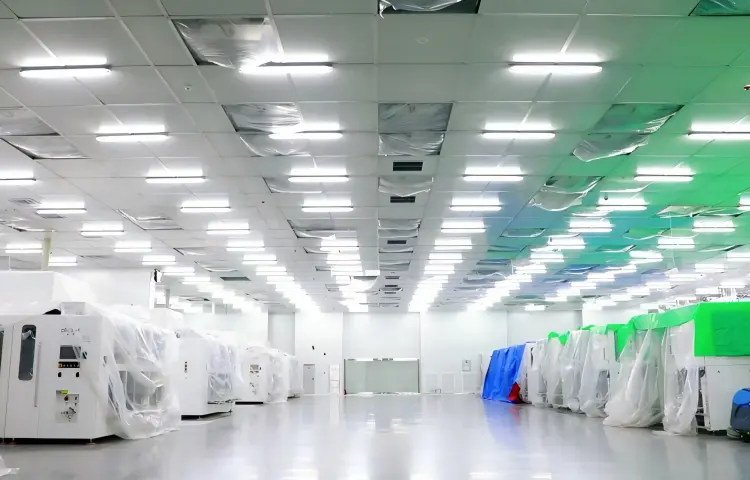
Xinzhou Photovoltaic Industrial Park Projects
Lithium-Ion Battery Cleanroom FAQ
Practical questions buyers, contractors and project teams usually ask before selecting a cleanroom enclosure system.
Planning a Lithium-Ion Battery Cleanroom Project?
Send Glostar your drawings, room schedule or BOQ. We can help review the enclosure package and recommend suitable wall, ceiling, door and window systems for your project.
- Project layout / room dimensions
- Cleanliness / environmental requirements
- Panel / ceiling / door requirements
- Destination country & schedule